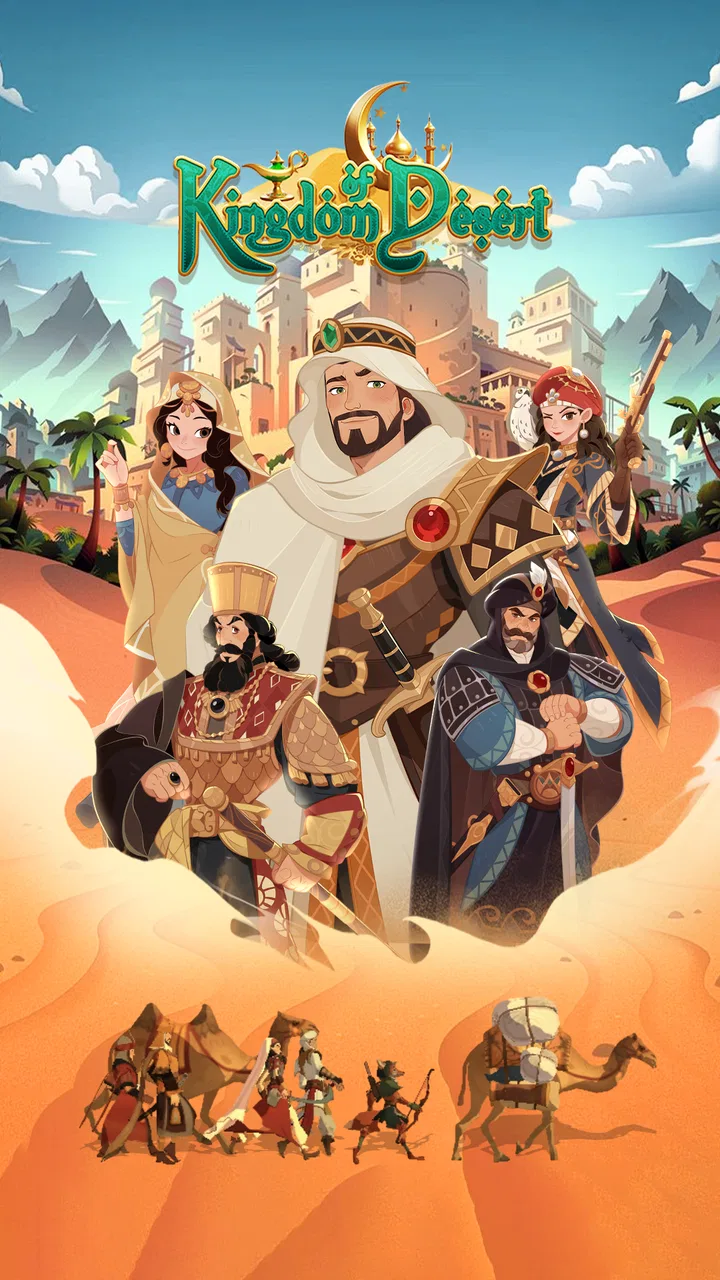
Kingdom of Desert
- 3.8
- Rating
- 1.00M
- Installs
- Free
- Price

 Analysis by App-foxy
I approached Kingdom of Desert as a strategy game for players who enjoy building a plan around a harsh setting rather than simply reacting to quick battles. Its central appeal is easy to understand: you are asked to think like the ruler of a desert kingdom, where every decision should feel connected to survival, expansion, and control. After spending time with it, I see a game that is most useful for people who like measured progress and long-term choices, not players looking for a short arcade session.
The game is free to download, belongs to the strategy category, and comes from YG Technology FZ-LLC. It is rated for Everyone 10+, which makes it approachable for younger players while still leaving room for competitive decision-making. Its current version is 1.1.3, and it runs on Android 7.0 or later. Those details matter because this is the kind of title you may want to keep installed for regular check-ins rather than finish in one sitting.
What to consider before choosing a desert strategy game
My first decision criterion with a game like this is the pace. A kingdom-management title needs to make waiting, planning, and returning feel worthwhile. If every session depends on constant attention, it becomes tiring. If progress is too passive, it loses the feeling of ruling anything. Kingdom of Desert sits in the middle: it is better suited to players who enjoy checking a developing plan, adjusting priorities, and accepting that not every improvement arrives immediately.
You May Also Like

 Blood Strike: 2.5 Anniversary
Blood Strike’s Loadouts Turn Every Drop Into a Tactical Gamble
A close look at Blood Strike’s custom loadouts: how fast access to signature weapons reshapes its battle royale rhythm, rewards preparation, and narrows the gap between fights.

 Pandora - Music & Podcasts
Pandora’s Music Is Easy to Start, but Harder to Recover
Pandora’s strength is its low-effort path from a seed to a station. Its weak spot is how much confidence it asks you to place in connection, setup, and quiet recovery.

 8 Ball Pool
 Is Built on Rivalries, Rematches, and Routine
A close look at the rivalries, rematches, shared routines, and unanswered safety questions that turn a quick pool match into a persistent mobile community.

 Samsung Music
’s Quiet Strength Is Playing What You Already Own
Its reach comes less from spectacle than from dependable access to a personal library. That simplicity is both the app’s strongest retention engine and its ceiling.

 AccuWeather: Weather Radar
AccuWeather Review: A Quick, Clear Forecast for Everyday Decisions
For everyday plans, the best forecast is the one you can understand quickly. AccuWeather makes rain timing, radar, and local conditions easy to act on, with a few trade-offs.

 Hill Climb Racing
Why Hill Climb Racing Still Turns Crashes Into One More Run
A tiny car, a bumpy hill and one more upgrade: Hill Climb Racing keeps resurfacing because its simple chaos makes every near-miss feel personal.
More From Our News Desk



The second criterion is how much freedom the game gives you to make meaningful choices. A desert setting naturally suggests difficult trade-offs. You have to think about what deserves attention first, whether to strengthen what already works, and when it is sensible to take a risk. Even when a strategy game presents a simple interface, those priorities are what determine whether it feels engaging after the first few sessions. I found myself judging the game less by its theme and more by whether each visit encouraged a different decision.
The third question is whether the game respects the way people actually play on a phone. I often play strategy games in short gaps: during a break, while waiting for an appointment, or at home when I only have enough energy for a quick check. A good mobile strategy title should let me understand what needs attention without forcing me to remember an entire complicated system. Kingdom of Desert works best when approached in that practical way, as a game I revisit in small, deliberate sessions.
There is also a financial decision. The game is free, but optional purchases range from $0.99 to $299.99 per item. That is a wide span, so I would treat the purchase screen as part of the decision rather than an afterthought. Players who are comfortable enjoying the free path should set their own limit before beginning. Anyone who dislikes seeing large optional prices in a mobile game may feel more comfortable with a premium strategy title instead.
How the setting affects the way I played
The desert theme is more than a visual wrapper in my mind. It changes how I interpret progress. In a greener kingdom game, expansion can feel like simply adding more buildings or territory. Here, the idea of scarcity makes every improvement feel more deliberate. Even a modest gain can seem important because the setting encourages you to think about what keeps the realm functioning.
That makes the game a good fit for players who enjoy atmosphere supporting strategy. I do not need a story to explain every action, but I do want the world to give my decisions a little weight. The desert premise provides that context. It helps separate this game from a generic city-building experience, even when the broader appeal remains familiar to fans of mobile kingdom management.
A useful way to play is to choose one clear priority for each visit. Instead of tapping through every available action, I recommend deciding whether the session is about strengthening your position, preparing for the next challenge, or simply checking that the kingdom is moving in the right direction. This prevents the game from becoming a routine of unexplained taps and makes the strategy easier to follow.
Where Kingdom of Desert earns its place
The strongest part of the experience is its focused identity. The title, setting, and strategy category point in the same direction, so the game does not feel like it is trying to be several unrelated genres at once. I enjoy that clarity. When I open it, I know I am there to think about a realm and its direction, not to switch between a puzzle mode, a role-playing adventure, and a collection of disconnected mini-games.
That focus also makes it easier to recommend to someone who is new to mobile strategy games. You do not have to begin with a complicated competitive mindset. You can start by observing how the kingdom develops, then become more intentional as you learn which choices deserve attention. I would especially suggest it to players who like the feeling of gradually understanding a system rather than mastering everything in the first hour.
Another strength is the way the game encourages return visits. I found the most satisfying sessions were not necessarily the longest ones. A short check-in can still feel useful when it gives you a chance to review your position and make one sensible adjustment. That structure suits a phone better than a design that expects uninterrupted concentration for a long period.
One less obvious benefit is that the desert theme can help you identify waste in your own play. When resources feel conceptually limited, it becomes easier to notice when you are making choices simply because an option is available. I started asking whether an action supported my immediate plan or merely filled the screen with activity. That habit is valuable in strategy games generally, but the setting makes it feel especially natural here.
Practical habits that improve the experience
My first tip is to avoid treating every available upgrade as equally urgent. A common mistake in kingdom games is spreading attention across too many improvements. I get better results when I decide what the kingdom needs most, then stay with that direction long enough to see whether it changes my position. This is more satisfying than constantly switching between small, unrelated gains.
My second tip is to use short sessions as planning sessions. I do not open the game only to collect or complete something. I look at what has changed, identify the next obstacle, and choose an action that supports the following visit. That simple routine makes the game feel strategic even when I have only a few minutes available.
My third tip concerns purchases. Because the in-app purchase range reaches from small amounts to very large optional items, I would not make a purchase while feeling impatient about progress. I would first play long enough to understand whether the basic loop is enjoyable on its own. If the free experience already feels satisfying, any later purchase becomes a deliberate convenience rather than a rescue from frustration.
I also recommend taking the age rating seriously in a family setting. Everyone 10+ makes the game broadly accessible, but younger players may still need guidance around optional spending. If a child is using the device, I would establish a clear rule before handing it over. That is not a criticism unique to this title; it is simply sensible whenever a free mobile game includes optional items at very different price levels.
Where another type of game may fit better
Kingdom of Desert is not the right choice for everyone. If you want immediate action, fast rounds, or a clear finish within a few minutes, a real-time battle game will probably suit you better. This title’s appeal depends on the pleasure of developing a position. Players who dislike waiting for a plan to take shape may find the kingdom-management rhythm too slow.
It may also disappoint players who want a deep, story-led role-playing experience. The desert setting creates a strong frame, but I would not choose this game solely because I am looking for character drama, cinematic storytelling, or a long narrative campaign. A story-focused adventure would be a better option for that purpose.
On the other hand, players who already enjoy large, highly detailed strategy games should think about complexity before switching. A desktop strategy game may offer more visible systems, more elaborate diplomacy, or greater control over a campaign. Kingdom of Desert is better when convenience matters. It gives me a mobile-sized way to engage with kingdom decisions, but it should not be judged as a replacement for every grand strategy experience.
The same comparison applies to premium alternatives. A paid game may offer a more predictable spending model, while this free title lowers the barrier to trying it. The trade-off is that optional purchases are present, and the largest listed item reaches $299.99. I would choose the free model when I want to experiment without paying upfront, and a premium alternative when I want the cost settled before I begin.
There is also a difference between this game and casual city builders. A casual builder can be relaxing because the main goal is often decoration or steady expansion. Kingdom of Desert is more appropriate when I want my choices to feel like they have strategic consequences. If I am in the mood to arrange buildings without much pressure, another category may be more comfortable. If I want to think about priorities in a themed realm, this one has the stronger case.
A realistic everyday use case
Imagine finishing work or school with ten minutes before dinner. You do not have enough time for a full competitive match, but you want something more engaging than scrolling. This is where I think the game makes sense. I can open the kingdom, review the current situation, choose one priority, and leave with a clear plan for the next visit. The session feels complete because I made a decision, not because I consumed a fixed amount of content.
Another useful situation is travel without a reliable long block of free time. A strategy game that supports brief check-ins can be easier to fit around delays and waiting rooms than an action game that punishes interruptions. I would still avoid assuming every visit must accomplish something dramatic. The value is in maintaining a plan and gradually seeing whether my decisions are working.
For a shared family device, the game can also become a gentle introduction to strategic thinking. A parent could ask why one improvement was chosen over another, or what the kingdom should prioritize next. The age rating supports that kind of approachable use, although spending controls and expectations should be discussed first.
What switching from another strategy game really involves
The cost of switching is not just downloading a new title. It is learning a different rhythm and accepting that your existing habits may not transfer perfectly. If you are coming from a fast battle game, you may need to stop looking for instant rewards. If you are coming from an elaborate empire simulator, you may need to appreciate a more focused mobile experience instead of expecting every familiar system.
I would make the change gradually. Keep your usual strategy game available while you test whether the desert kingdom’s pacing suits you. During the first sessions, pay attention to three things: whether you enjoy returning without being pushed, whether the setting makes your decisions feel meaningful, and whether the free experience remains comfortable without purchases. Those answers will tell you more than a quick first impression.
Progress habits can also create a switching cost. Once you have invested time in another kingdom, starting again somewhere else may feel inconvenient. My advice is to switch for a specific reason, such as wanting a more mobile-friendly routine or a different atmosphere, not simply because the theme looks attractive. The desert setting is appealing, but the long-term fit comes from the decision loop.
Device compatibility is another practical point. The game requires Android 7.0 or later, so it is accessible to many Android users, but anyone with an older device should check compatibility before planning around it. On a supported phone, the more important question is whether the game’s regular return pattern matches your schedule. A technically compatible game can still be a poor choice if its pace conflicts with how you like to play.
How the current reception should shape expectations
The game has an average rating of 3.8 from around 1.1 thousand ratings, with 22 written reviews, and it has passed one million installs. I read those figures as evidence of real interest rather than a guarantee that every player will enjoy it. The rating suggests a mixed but reasonably positive reception, so I would approach it with curiosity instead of assuming it is flawless.
That balance matches my own view. The game has a clear audience, and it serves that audience best when expectations are realistic. It is not a universal strategy solution, and its free-to-play structure will not appeal to everyone. Still, the combination of a recognizable kingdom loop, a distinct desert identity, and short-session usefulness gives it a reason to exist beyond simply copying a familiar category.
The release date is May 6, 2026, which also places the game in a relatively early stage of its life. I would keep that in mind when deciding how much long-term commitment to make. Early versions can be enjoyable, but players who demand a fully mature ecosystem from day one may prefer a long-established alternative. The current version, 1.1.3, shows that the game is already being maintained through version changes, but I would still judge it by the experience available now rather than promises about what may come later.
My recommendation for different kinds of players
I recommend Kingdom of Desert to someone who wants a free mobile strategy game with a clear theme, a slower planning rhythm, and sessions that can fit around everyday life. It is especially suitable for a player who enjoys checking a developing kingdom, making one or two thoughtful choices, and returning later to see whether the plan held together.
I would recommend caution to anyone who is highly sensitive to in-app purchase design. The free entry is useful, but the listed purchase range is broad enough that a player should decide in advance how, or whether, to spend. I would also steer away players who want nonstop action, a tightly directed story, or the complete complexity of a desktop-scale strategy campaign.
For a friend, my advice would be simple: try it without spending first, play it in the short sessions it naturally supports, and judge whether the desert setting adds meaning to your choices. Do not rush through every option. Pick a priority, observe the result, and learn the rhythm of the kingdom.
My final take is that Kingdom of Desert is worth trying when you want strategy that feels deliberate rather than frantic. It wins through accessibility, atmosphere, and a routine that fits a phone. It loses some ground with players who expect instant action, a fixed upfront price, or a deeply established strategy world. For the right player, though, the free download offers a practical way to test a themed kingdom game before deciding whether it deserves a permanent place on the device.
FAQs for Kingdom of Desert
01What is Kingdom of Desert about?
Kingdom of Desert is an immersive strategy game where players build and manage a thriving desert kingdom. Players must balance resource management, city building, and strategic battles against rival factions. The game offers a rich storyline, engaging quests, and dynamic environments that evolve based on the player's decisions.
02Is Kingdom of Desert free to play?
Yes, Kingdom of Desert is free to play with optional in-app purchases. These purchases can enhance gameplay by providing additional resources, unique character skins, and special abilities. However, players can still enjoy the full experience without spending money, as the game is designed to be accessible to all users.
03What platforms is Kingdom of Desert available on?
Kingdom of Desert is available for both Android and iOS devices. You can download it from the Google Play Store for Android or the Apple App Store for iOS. The game is optimized for mobile play, ensuring smooth performance and intuitive controls across different devices.
04Does Kingdom of Desert require an internet connection?
Kingdom of Desert primarily requires an internet connection to access its full range of features, including multiplayer battles and daily challenges. However, there are offline modes available for single-player campaigns, allowing users to enjoy the game without a constant internet connection.
05What age group is Kingdom of Desert suitable for?
Kingdom of Desert is suitable for players aged 12 and above. The game includes elements of strategy, resource management, and combat that may be challenging for younger audiences. It also features mild fantasy violence, aligning with its age rating to ensure appropriate content for its players.
Pros
- Stunning graphics capture the desert's vastness.
- Engaging storyline with multiple plot twists.
- Diverse character customization options.
- Smooth gameplay with minimal lag.
- Regular updates with new features and events.
Cons
- In-app purchases can be quite pricey.
- Requires constant internet connection.
- Progression can be slow without purchases.
- Occasional bugs in certain missions.
- Limited offline play capabilities.

Kingdom of Desert
Gallery